5 Reasons Your Outfit Feels Off (When Nothing Is Actually Wrong)
September 1, 2026 · 7 min read
You are dressed. Everything fits. Nothing is stained, nothing is wrinkled, nothing is wrong in any way you could point to. You look in the mirror and the outfit is just... fine. Flat. Not what you were going for, and you cannot say why.
This is the most common thing people bring to us, and it is worth naming clearly: the feeling is real and it is not vanity. Something is genuinely happening in the outfit. It is just operating below the level most of us have language for.
There are five causes that account for most of it. None of them are about your body, your budget, or whether you have taste. All five are structural, which means all five have a fix you can do in under a minute with clothes you already own.
1. The proportions are even, so it reads as a rectangle
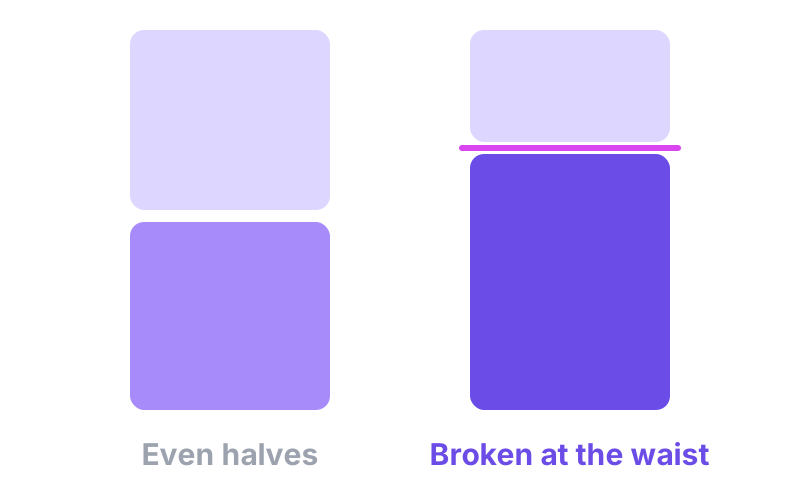
Look at where your outfit divides. If the top half and the bottom half take up roughly the same amount of vertical space, your eye reads the whole thing as one rectangle. A rectangle has no focal point and no movement, so it reads as shapeless no matter how nice the individual pieces are.
This is why an oversized shirt with wide-leg trousers can feel like a costume even though both pieces are good. Two volumes of the same size cancel each other out. It is also why the same trousers suddenly work with a fitted knit: the halves stopped matching.
If you follow fashion closely you have probably absorbed this as the rule about high-waisted everything. That rule is a special case of the real principle, which is simply that the eye needs one clear break.
The fix: break the line once. Tuck one side in, size one piece down, or add a belt. You need one break, not a whole silhouette rethink.
2. There is no third piece, so it reads as unfinished
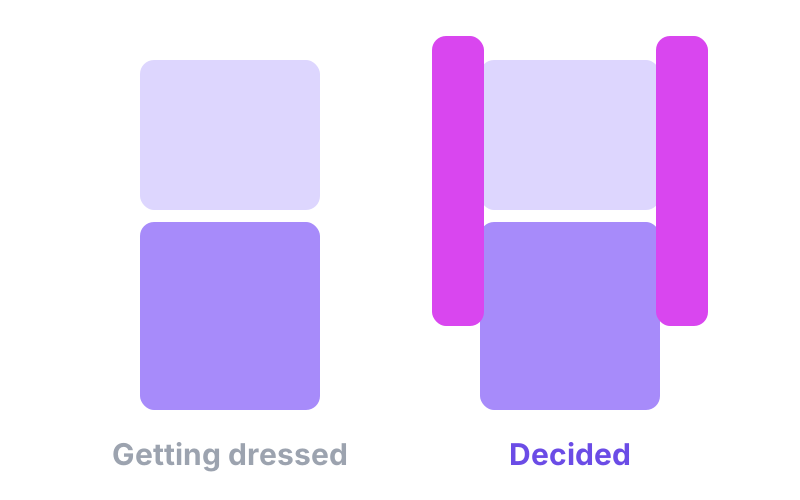
A top and a bottom is the minimum required to leave the house. That is the whole problem. When an outfit contains exactly the number of items required and not one more, it reads as the absence of a decision, because that is precisely what it is.
The third piece is anything that was not strictly necessary: a blazer, a denim jacket, a trench, a belt, a scarf, a second necklace, a visible watch. It does not have to be large and it does not have to be expensive. It has to be optional. That is what makes it legible as a choice.
This is the single cheapest fix on this list, because almost everyone already owns the third piece. It is usually hanging up somewhere, unworn, because it was bought for an occasion rather than a habit.
The fix: add one more thing. A jacket, a belt, a scarf, a second necklace. The third piece is what makes an outfit read as chosen.
3. It is all one texture, so the light goes flat
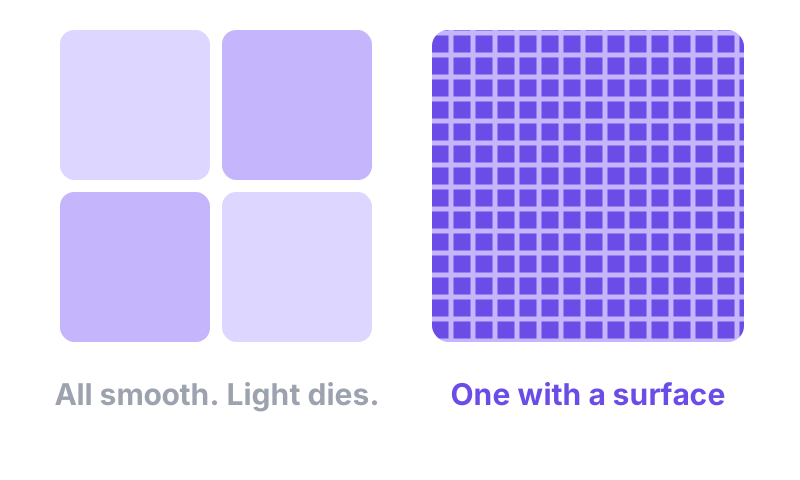
Flat cotton from head to toe absorbs light evenly. There is no highlight anywhere, no shadow anywhere, and the whole outfit goes quiet. Photographs make this much worse, which is why an outfit that felt acceptable in the mirror can look completely dead in a picture.
You do not need pattern to fix this, and you do not need to know anything about fabric. You need one thing with a surface: a chunky knit, leather, suede, denim, corduroy, raw linen, anything with a visible weave. One item is enough. The contrast between smooth and textured is what makes the smooth pieces look deliberate instead of default.
This is also the cause people most often misdiagnose as a color problem. They go shopping for a brighter top when what the outfit actually needed was a rougher one.
The fix: add one thing with a surface. Knit, leather, denim, suede, raw linen. One is enough to wake the rest up.
4. The shoes are dressed down from the clothes
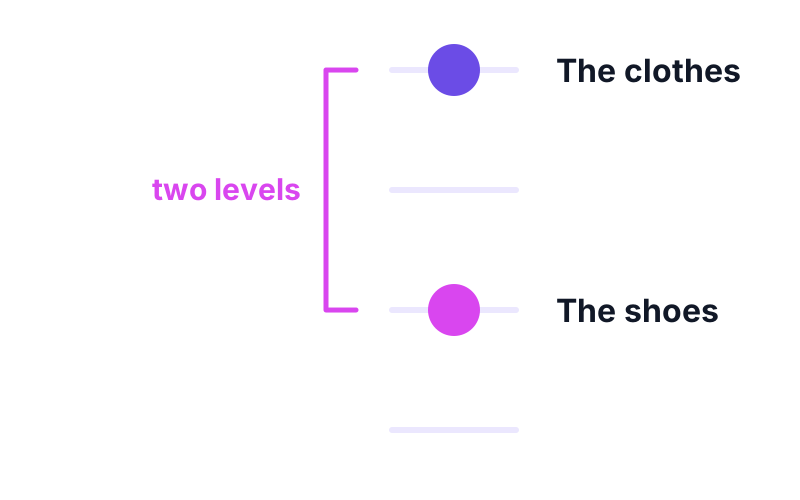
This is the most common single cause we see, and it is almost always invisible to the person wearing it, because shoes get chosen last and get chosen for comfort.
Every garment sits somewhere on a formality ladder. When the clothes are two or more rungs above the shoes, the outfit does not average out. It settles at the lower rung. A silk slip dress with worn running shoes does not read as high-low, it reads as a nice dress you did not finish. The shoes win.
The direction of the fix does not matter, which is the useful part. Move the shoes up a level, so loafers or ballet flats or a clean boot instead of the running shoes. Or move everything else down a level, so denim instead of the slip dress. Both close the gap. The gap is the problem, not the shoe.
The fix: move the shoes up a level, or move everything else down one. Either works, because the gap is what you are fixing.
5. Nothing repeats, so nothing looks decided
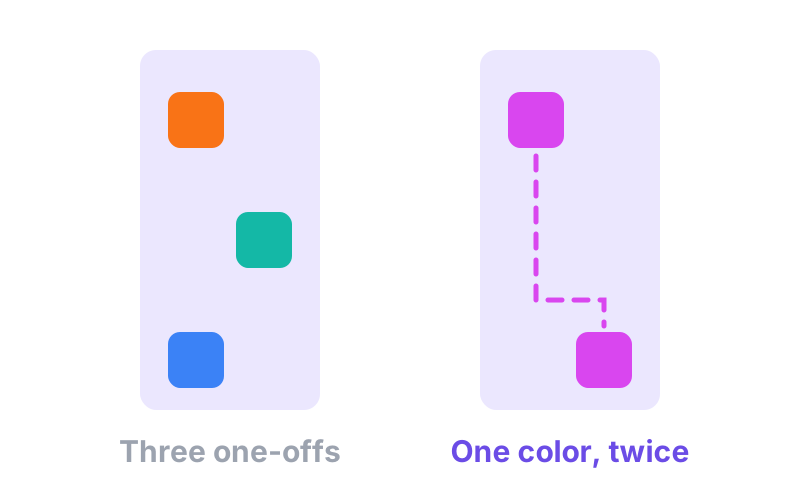
The eye reads repetition as a decision and everything else as an accident. Three unrelated accent colors, a red bag, a green shoe, a blue earring, look like three separate impulses, because that is what they were.
Repeat one thing in two places and the whole outfit reorganizes itself around that echo. Bag and shoe. Belt and earring. The stripe in a scarf picking up the color of a knit. Two occurrences is enough. You do not need a coordinated set, and matching everything is a different mistake with its own flat, over-planned look.
This is the one that people who are into clothes tend to do instinctively and could not explain if asked, and the one that people who are not into clothes find most immediately useful once it is said out loud. It is a rule, it takes ten seconds, and it works every time.
The fix: pick one color and put it in two places. Bag and shoe, belt and earring. Twice is all it takes.
How to actually use this
Do not run all five as a checklist while you are getting dressed. That is a good way to make getting dressed take twenty minutes and feel worse.
Run them once, in order, on an outfit that already feels off. The order matters, because it moves from the structural to the decorative. Proportion changes the most and costs the least effort. Repetition is real but it will not rescue an outfit that reads as a rectangle. In practice you usually find the answer at step one or step four and stop there.
The other thing worth knowing is that these five are not independent. Adding a third piece often fixes the proportion problem at the same time, because a jacket that ends above the widest point of your trousers creates the break you were missing. Adding a textured third piece can fix three of the five at once. This is why small changes to an outfit sometimes produce a result that feels wildly out of proportion to the effort.
Why the feeling comes before the explanation
Worth saying plainly, because it is the part that makes people feel stupid: you noticed the problem before you could name it. That is not a failure. That is normal, and it is how visual perception works. Your eye is considerably better at pattern detection than your vocabulary is at describing patterns, so the verdict arrives first and the reasoning does not arrive at all.
Everyone has this. The difference between someone who follows fashion closely and someone who does not is not that one of them sees more. It is that one of them has been handed the words. All five things on this list are learnable in an afternoon, and once you have them you cannot unsee them.
This is the whole idea behind Presence Plus. You upload a photo of what you are wearing and get a specific read on what is happening structurally, in these terms, on this outfit rather than in the abstract. Not a score for its own sake, and not a rule you have to memorize, but the sentence you were missing when you stood in front of the mirror and thought: something about this is off.
Want to know which of these is happening in your outfit?
5 free assessments. No credit card required.
Download Presence+ on the App Store Get Presence+ on Google Play